
Sharpening pitchforks

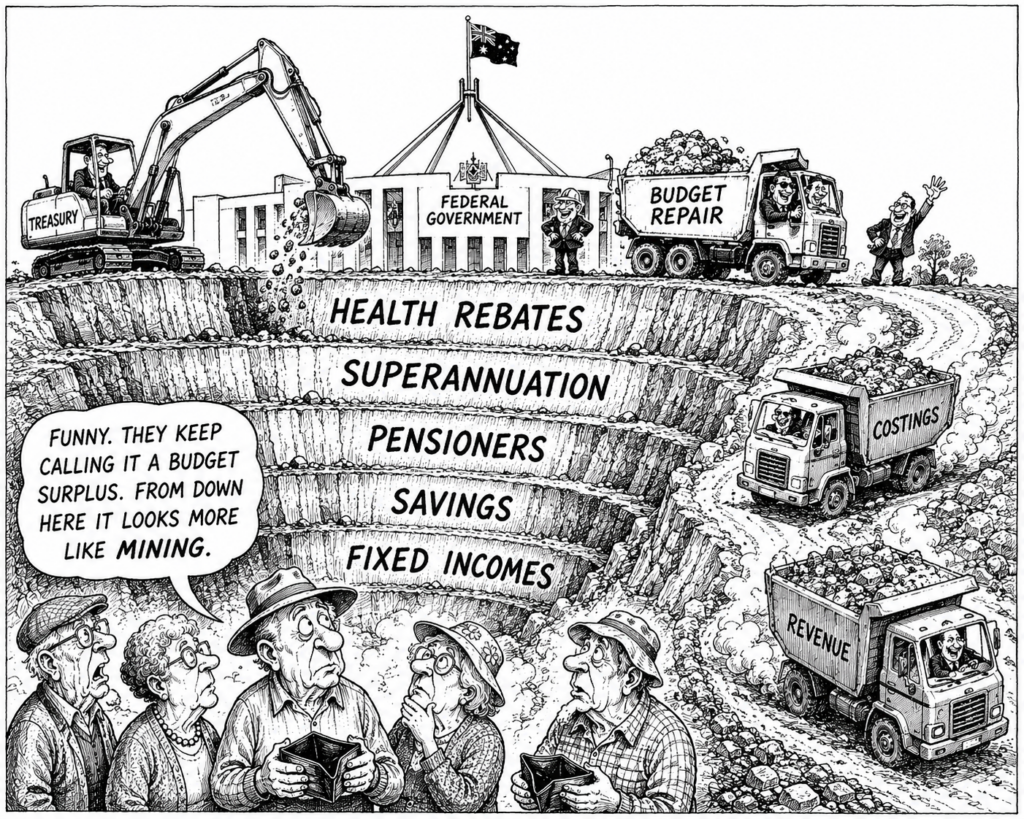
Older Australians are increasingly furious at a federal budget many believe quietly raids the generation that spent forty years paying taxes, stamp duty, Medicare levies, fuel excise, GST and probably half the Treasurer’s wine cellar.
Polling suggests retirees are noticing. Governments always assume older voters are harmless because they struggle with QR codes. Turns out they still know how to sharpen a pitchfork.
The criticism centres on reduced private health rebates, super changes and rising living costs hammering fixed incomes. Retirees are discovering inflation works a bit differently when you no longer have wages and your “growth asset” is a packet of Arnott’s biscuits bought in 2019.
Please hold – forever!
Australia’s aged care waiting lists have now evolved into something between a soap opera and a Telstra call centre queue.
New reporting shows older Australians are waiting well over a year for home care support packages. Some people die waiting. Others deteriorate while bureaucrats “process demand pressures”, which is Canberra language for “we underfunded this again”.
Experts say the latest budget funding is unlikely to materially fix the problem because workforce shortages, administration delays and demand growth remain enormous. The system resembles a garden hose attached to a thimble.
Governments adore announcing aged care funding because the press conferences are lovely. Smiling ministers. Hard hats. High-vis vests. Then six months later Doris is still waiting for a shower rail installation while navigating seventeen assessment forms and a robo-queue.
Private health: Yeah, right!
Health groups are warning federal budget rebate cuts could drive more Australians out of private health insurance.
Which is awkward because private cover already feels less like “peace of mind” and more like a monthly direct debit to avoid dying in a hospital corridor sometime around 2034.
Industry groups argue reduced incentives could push older Australians back into the public system, increasing pressure on hospitals already running hotter than a Queensland ute seat in January.
Australians now pay private premiums with the enthusiasm of medieval peasants handing grain to tax collectors. Nobody’s happy. Everybody pays. Then you still get told the specialist won’t use the lower gap agreement.
Superannuation: If you are lucky
Retirement experts are calling for superannuation to become simpler because many Australians struggle to maximise retirement income under the current system.
Understatement of the decade.
Modern superannuation now requires the skills of a forensic accountant, chess grandmaster and hostage negotiator. Account-based pensions. Transfer balance caps. Drawdown strategies. Tax optimisation. Reversionary nominations. Half the country just nods politely and hopes the adviser isn’t secretly billing by syllable.
The industry says complexity prevents retirees from using their savings efficiently. Shocking development: Australians dislike making life-changing financial decisions through 90-page disclosure statements written by lawyers possessed by demons.
Specials so special they weren’t
A court has ruled Coles misled shoppers with some discount pricing practices and the supermarket giant could face enormous fines.
Australians are stunned. Next we’ll discover airport sandwiches are expensive.
The case focused on “discounts” where prices were allegedly raised before being reduced, creating the appearance of savings. Retail psychology now basically consists of placing a yellow sticker on something and watching people fight over Greek yoghurt like it’s wartime rationing.
The supermarkets insist they value customer trust. Which is comforting. Because customers would also value not needing a spreadsheet to buy laundry detergent.
Home care refunds: Better late than never
Some home care recipients may be eligible for refunds after being overcharged under aged care arrangements.
Wonderful news. Australians can now spend six months reclaiming money they never should have been charged in the first place.
The broader issue remains a system so complex many elderly Australians don’t even realise they’ve been incorrectly billed. The aged care sector has developed a rare business model where confused customers, exhausted families and government paperwork all collide at high speed.
Flu season arrives, so does human stupidity
Medical experts warn vaccination rates remain below ideal levels as the 2026 flu season ramps up.
Public health messaging now competes against Facebook memes, wellness influencers and Gary from Ipswich who once watched half a YouTube video about turmeric.
Doctors are particularly concerned about older Australians, who face greater risks from influenza complications. Every year the flu arrives and Australians react with complete astonishment, like magpies discovering spring.
Tax scams – the national sport
The Commonwealth Bank is warning Australians about tax-time scams targeting unsuspecting victims through fake ATO messages, phishing emails and fraudulent links.
Retirees remain prime targets because scammers know older Australians still possess two valuable things: savings and basic manners.
The modern economy increasingly resembles a giant digital pickpocket convention. Banks warn customers. Government warns customers. Telecoms warn customers. Then somebody still clicks a link promising a refund from “Australian Tax Office Official Department Payment Secure”.
Meanwhile the slang has died too
Apparently younger Australians are abandoning classic Aussie slang.
Terms like “fair dinkum”, “drongo” and “rack off” are fading because modern communication now consists mainly of emojis, TikTok abbreviations and corporate LinkedIn jargon written by people who say “reach out” instead of “call”.
The country that gave the world “bogan”, “bludger” and “she’ll be right” is slowly being linguistically replaced by influencers saying “unalive” to appease algorithms designed by Californian tech billionaires.
The week that was
So here we are. Retirees waiting for aged care, paying more for insurance, untangling superannuation spaghetti, dodging tax scammers and discovering supermarket specials were about as genuine as a politician in a hard hat.
Meanwhile Canberra keeps assuring everyone the system is “targeted”, “sustainable” and “fit for purpose” — which are usually the final words spoken before a government inquiry.