Housing Discovers Gravity
ANZ Bank reckons Australian capital-city house prices could fall 4.3 per cent this year and another 3.4 per cent in 2027, producing a cumulative peak-to-trough fall of about 10.6 per cent. Sydney and Melbourne are expected to cop the biggest hits, while Brisbane, Adelaide and Perth should fare better. ANZ says higher interest rates, stretched affordability and recent tax changes are weighing on the market, although a shortage of housing should limit the damage.
For homeowners, falling prices are hardly thrilling. For younger Australians trying to get into the market, they’re potentially the first bit of good news in years. The interesting part is that auction clearance rates have been below 50 per cent in Sydney and Melbourne for much of the past ten weeks. Apparently, the market is finally remembering that houses are homes, not lottery tickets.
Let Them Sweat
Scott Pape, the Barefoot Investor, isn’t shedding tears over falling house prices. He reckons the correction is long overdue after prices increased by more than 400 per cent since 2000 and outpaced wages, helping make home ownership increasingly difficult for younger Australians.
His point is simple: if prices fall 10 per cent, they will merely return to where they were in late 2024. A Resolve poll also found 61 per cent of Australians thought falling prices were a good thing overall. The property market may be cooling and apparently the outrage is concentrated among people with political agendas or newspapers to sell.
Your Car Insurance Is Going Up. Why?
ASIC has discovered that car insurers are remarkably good at increasing premiums and considerably less good at explaining why. Motor insurance premiums rose 8 per cent in the year to July 2025, after increasing more than 42 per cent between 2019 and 2024. Yet none of the eight brands examined clearly explained the key factors behind premium increases in their renewal or quote documents.
There is, however, one useful finding: 31 per cent of customers who challenged their renewal price managed to get it reduced without changing their cover. Paying annually rather than by instalments can save some customers up to 20 per cent. So, the lesson is simple: don’t automatically accept the renewal. Ask questions, shop around and make the insurer explain the bill. These days loyalty means very little.
Centrelink Snoops
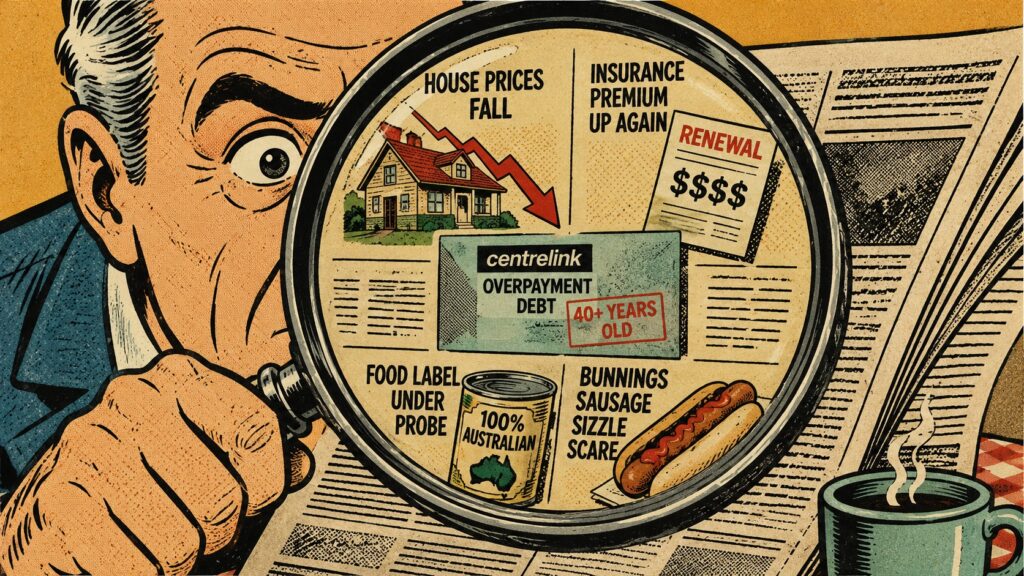
Centrelink is chasing nearly $5 billion in outstanding debts. A good idea except that about 600 of them are more than 30 years old and one dates back more than 40 years! The obvious question is whether anyone can reliably establish what some of these debts are actually for given the intervening decades.
In the 1990s, payslips were pieces of paper, not digital records sitting conveniently in the cloud. How do you find the paperwork to show the debt is an error? Apart from that, some historical calculations simply can’t be trusted. Is this where we mention the robodebt debacle? Somewhere between the computer and the filing cabinet is a retiree wondering where the person with the binoculars hiding in the bushes comes from.
What’s On The Label
The government has asked the ACCC to investigate allegations of misleading food labelling raised by the ABC’s Four Corners. The issue is straightforward: if a product claims to be Australian-grown, cage-free or made from ingredients, consumers should be able to believe it.
The government says maximum consumer-law penalties have been increased tenfold to $100 million and that the ACCC has received almost $100 million in additional funding. Good. Because when you’re paying a premium for something labelled “Australian”, the least you should have to worry about is whether the label is telling the truth.
Read the government’s statement
A Better Way To Check
There’s some genuinely good news for older men this week. New prostate cancer guidelines will see GPs offer PSA testing from age 45 and remove the previous upper age cut-off, with men over 70 potentially continuing two-yearly testing if they have a life expectancy of more than seven years.
The guidelines also move away from routine digital rectal examinations and recommend MRI before biopsy where PSA levels are elevated. The aim is to detect more aggressive cancers earlier while reducing unnecessary biopsies and treatment of low-risk cancers. That’s a sensible combination: better detection without automatically reaching for the surgical toolbox. Sometimes progress really does look like making a medical test less unpleasant.
Phew! Emergency over.
Finally, fears of a national emergency have been eased: The disappearance of the Bunnings sausage sizzle.
An unknown, but politically motivated individual, produced and distributed on social media an image claiming Indian food had replaced the traditional snag. The accompanying text expressed the usual outrage about Australian culture being “erased”. Undoubtedly, there will have been those who believed it because they wanted to, but Bunnings confirmed the image was fake and said its weekly sausage sizzle hasn’t changed.
So, the sausage is safe. The bigger lesson is less comforting: if a fake image can invent the end of Australian civilisation and many people believe it, we should all be a tad more suspicious of what lands in our social media feeds.
Salty Summary
This week’s message is simple: don’t believe everything you’re told, especially when somebody else benefits from having you believe it. Check the price, the label, the paperwork and the sausage.
Someone Had to Say It!